

Obesity in older adults isn’t just “a few pounds after retirement.” It tags along with heart disease, diabetes, joint pain, slower walking speeds, and—plot twist—low muscle mass (hello, sarcopenic obesity). The mission (should you choose to accept it) is safe weight loss without losing strength or independence. We’re talking measured, research-backed moves that help you feel steadier, stronger, and more you. Yes, you can be the grandparent who out-walks their grandkids at the zoo. Takeaway: we’re not chasing a smaller you; we’re building a sturdier you.
Hot take in 3…2…1: a “just eat less” plan is not the vibe past 60. With age, muscle and bone quietly downshift; crash diets hit the gas on that decline. The fix? Modest calorie reduction paired with resistance training for seniors and higher-quality protein. The scoreboard changes too—from “What’s my BMI?” to “Can I climb stairs and open pickle jars without help?” That’s weight loss for seniors done right.
We’re protecting muscle, bone, and brain while trimming fat.
We’re prioritizing mobility, energy, and disease risk reduction.
We’re aiming for changes you can live with, not a 6-week bootcamp that ends with a donut parade.
Takeaway: the goal isn’t skinny—it's steady, strong, and still doing your own errands.
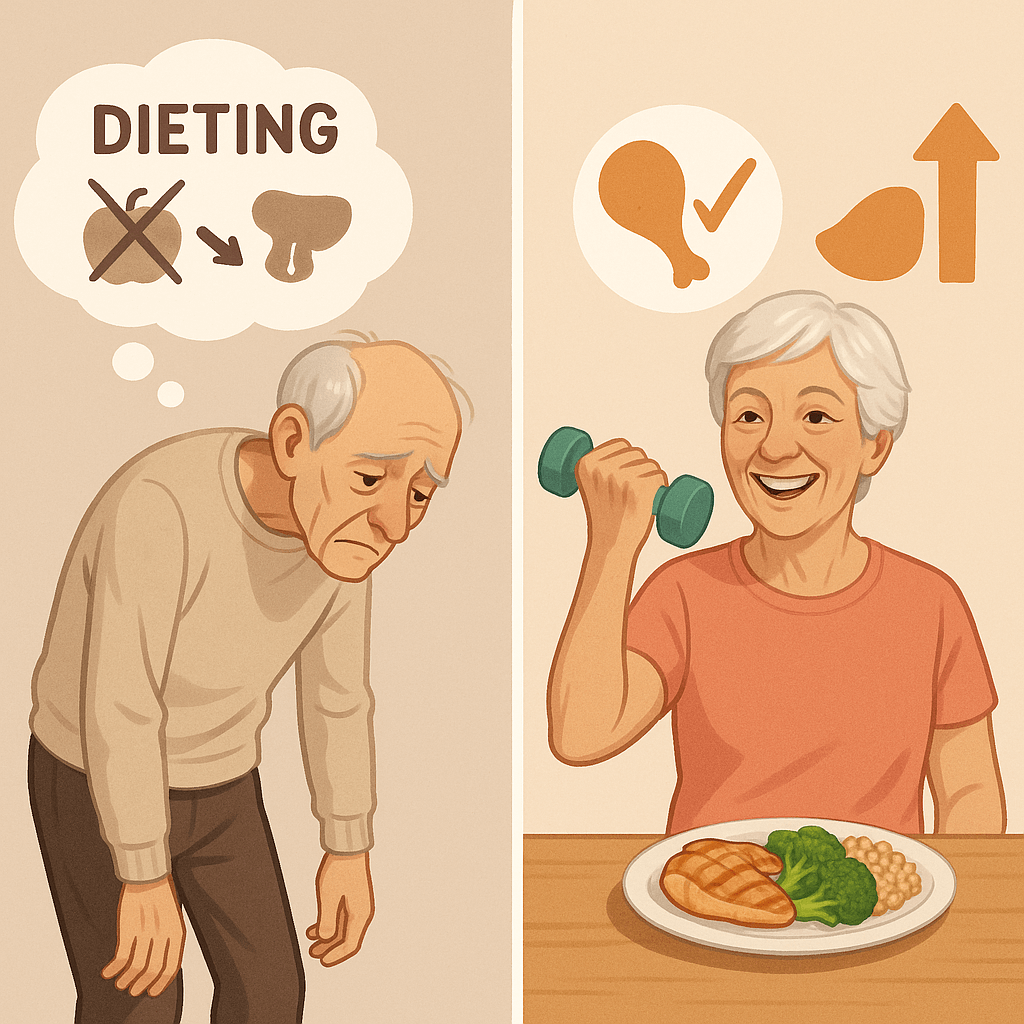
Preserve or increase muscle mass while losing fat
Aim for modest, realistic weight loss (5–10% of body weight can improve health markers)
Prioritize function: balance, strength, and aerobic capacity
Address social, cognitive, and medical factors that affect adherence
Takeaway: lift some, walk some, eat smart, and make it doable enough to repeat.
Before you channel your inner Rocky, a quick pit stop with the pit crew.
Get medical clearance, especially with heart disease, uncontrolled hypertension, diabetes, or recent hospitalization. Yes, this is the part where your doctor raises an eyebrow at your “I’ll just YouTube it” plan.
Review medications (some encourage weight gain or mess with appetite/metabolism).
Screen for sarcopenia, unintentional weight loss, cognitive impairment, and fall risk. If balance is wobbly, we fix that first with balance training for older adults.
Involve a team when possible: primary care, geriatrician, registered dietitian, and physical therapist—aka your Wellness Avengers.
Takeaway: safety first so progress doesn’t come with a side of preventable setbacks.
Let’s be real: the “eat air and sadness” diet is a hard pass. Small, sustainable tweaks win for senior nutrition.
Aim for moderate calorie reduction: target gradual loss to reach ~5–10% of body weight over about 6 months. Rapid loss = muscle and nutrient losses RSVP yes.
Prioritize protein: aim for ~1.0–1.2 g/kg/day to preserve muscle; bump to 1.2–1.5 g/kg during active weight loss or illness. Kidney disease? Adjust with clinician guidance—no freestyle here.
Spread protein evenly: 20–30 g per meal allows muscle to say, “Ah yes, build mode.” A single 60 g dinner won’t “catch up” for a protein-light day.
Choose nutrient-dense foods: vegetables, fruits, whole grains, legumes, lean proteins, dairy or fortified alternatives, and healthy fats (olive oil, nuts). Your joints like antioxidants, your heart likes fiber, and your taste buds like flavor—what a trio.
Reduce sugary drinks, processed snacks, and refined carbs that add calories without fullness. Soda is the plot twist nobody asked for.
Behavior tweaks that add up: smaller plates, mindful eating, planned snacks, simple meal templates, and set meal times to avoid “oops, crackers for dinner again.”
Real-life meal idea:
Breakfast: Greek yogurt with berries and walnuts (20–25 g protein)
Lunch: Big vegetable and bean salad with grilled chicken
Dinner: Steamed fish with quinoa and roasted vegetables
Takeaway: protein at every meal + plants you actually like = muscle kept, cravings calmed.
Before your eyes glaze over like a Krispy Kreme, here’s the truth: exercise isn’t just “extra credit”—it’s the main event for keeping muscle and moving better during weight loss for seniors.
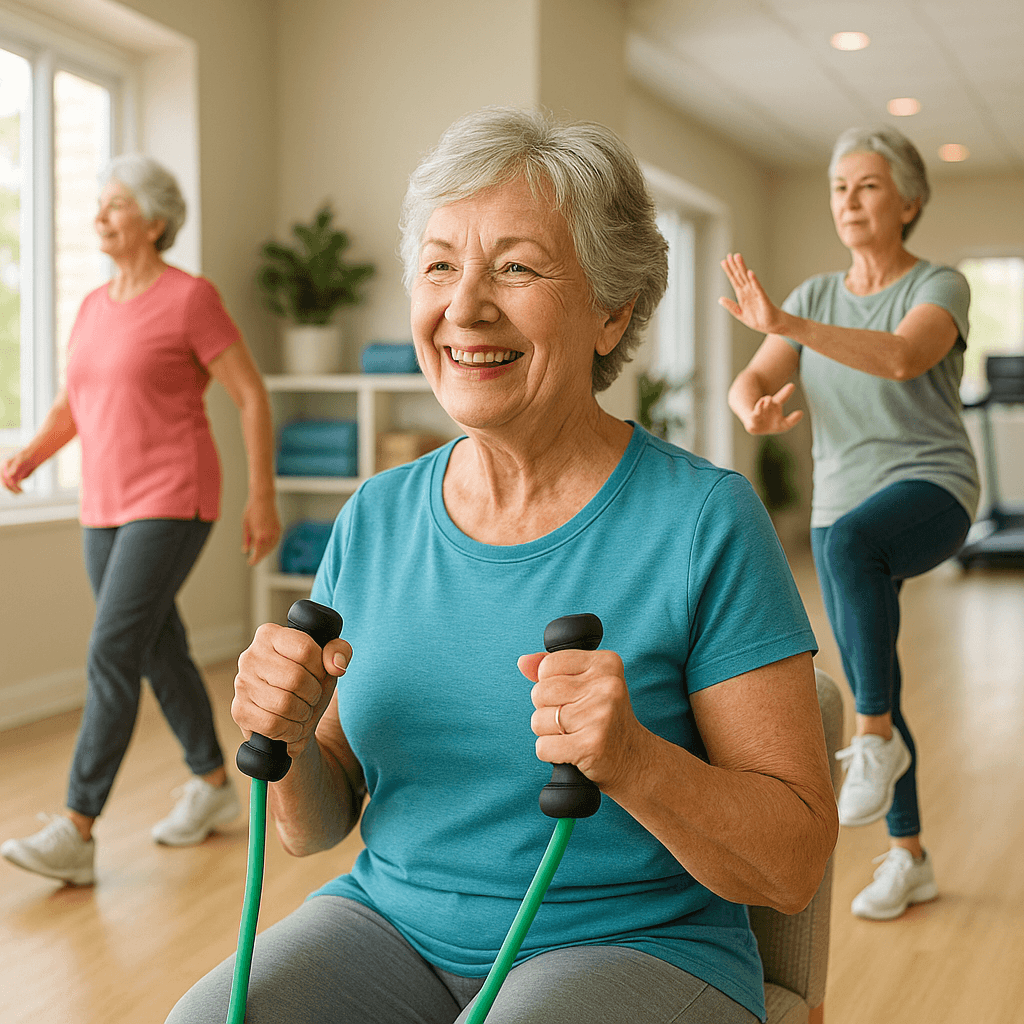
Resistance training: 2–3 times/week for major muscle groups using machines, free weights, bands, or bodyweight. Start light, progress slowly. Even 12–16 weeks of supervised training boosts strength and lean mass in older adults. Translation: more “I’ve got it” and less “Can you get that for me?”
Aerobic activity: at least 150 minutes/week of moderate intensity (walking, cycling, water aerobics). Break into 10–15 minute chunks if needed. Your knees will send a thank-you card.
Balance and flexibility: 3–4 times/week (single-leg stands, tandem walk, heel-to-toe, tai chi). Fewer stumbles, more swagger.
Function-first exercises: sit-to-stand, step-ups/stairs, carries (groceries count), light push/pull. If it helps with daily life, it counts.
Sample weekly plan:
Monday: Full-body resistance training + 15-min walk
Wednesday: 30-min brisk walk + balance/flexibility session
Friday: Resistance training + 15-min light cardio
Saturday: 45-min moderate activity (gardening, dance, or group class)
Start slow. If mobility is limited, a physical therapist or trainer experienced with older adults is your best co-pilot.
Takeaway: lift to keep what matters, move to feel better, balance so you stay upright doing it.
Brains love routines; willpower loves naps. Let’s design for reality.
Set tiny, specific goals: “10 extra walking minutes a day,” “protein at breakfast,” “two strength sessions this week.”
Use social support: walking buddy, group classes, family check-ins. Accountability > motivation.
Track non-scale wins: stairs feel easier, clothes fit better, BP down, energy up, fewer “oof” noises when standing.
Simplify the environment: meal prep, grocery list on repeat, resistance bands at home, a chair for safe exercises, sneakers by the door.
Takeaway: make the healthy choice the easy choice, and watch consistency quietly do its magic.
Sometimes lifestyle needs backup singers.
Review and adjust meds that promote weight gain (certain diabetes, mood, or blood pressure meds). Don’t DIY—this is a physician remix.
Refer to a registered dietitian for an individualized plan, especially with medical complexity or picky appetites.
Bariatric surgery: for severe obesity with comorbidities, discuss carefully. Age alone isn’t a hard “no,” but goals, risks, bone health, nutrition, and support systems matter. Geriatric expertise required.
Newer anti-obesity meds (e.g., GLP-1 agonists): can be effective, but monitor closely for nausea, dehydration, impacts on muscle mass, and drug interactions. Pair with protein and resistance training to protect lean tissue.
Takeaway: tools exist beyond broccoli and biceps—use them wisely with a pro in your corner.
Mrs. L, 72, BMI 34, knees grumbling like a radio talk show: With her doctor and PT, she started twice-weekly resistance training (band squats, chair stands, rows) and daily 20-minute walks. A dietitian upgraded breakfast to Greek yogurt and eggs, and soda got swapped for water and tea. Six months later: 7% weight loss, less knee pain, stairs without a halftime break, and steadier balance. Independence up, fear of falling down.
Takeaway: small, steady steps beat grand gestures you can’t sustain.
Unintentional or rapid weight changes
Trouble with activities of daily living (dressing, bathing, cooking)
Multiple chronic conditions or a complex medication list
Recurrent falls or new mobility issues
Takeaway: earlier help = better outcomes and fewer “if only we’d started sooner” moments.
Get medical clearance and baseline labs if needed.
Set a realistic goal (example: 5% weight loss in 3–6 months).
Add resistance training 2x/week and build to 150 minutes/week of moderate aerobic activity.
Increase protein to ~1.0–1.2 g/kg/day and prioritize whole foods.
Use small behavior changes: meal prep, walking buddy, track non-scale progress.
Involve health professionals (dietitian, PT, geriatrician) for personalized care.
Losing weight later in life isn’t about heroics—it’s about repeatable habits that protect muscle, lower disease risk, and keep you independent. Start with one change this week (a 10-minute walk or a protein-rich breakfast). Future you is already clapping.
2 Steps Proven Method To Get You Lean
More about Intermittient Fasting, Gym, Habits, BurnFat,
Top Posts
a year ago
5 Proven Steps To Build Muscle
a year ago
5 Hidden Health Miracles of Swimming You Didn’t Know About
a year ago
"Secret" Weapon
2 months ago
2 Steps Proven Method To Get You Lean
a year ago
Unlocking the Secrets of Vitamin C: More Than Just an Immune Booster!
2 months ago
Natural Testosteron Booster


